Mission of the Center for Water Resources Management

Education and Research on Water Management Now and in the Future
The Center for Water Resources Management (CWRM) was created to provide educational and interesting information about the condition of water resources from Long Island, New York to the nation and the world. It promotes thoughtful discussion on the connections between the health of the planet and actions to improve the protection and management of water resources.
CWRM works to develop and advance innovative practices, technical solutions, legal strategies, policy discussions, and management approaches for the benefit of local and world ecosystems and the impacts on water systems both locally and beyond.
GOALS OF CWRM
Water resource challenges require effective solutions relevant to local problems as well as those being confronted across the nation. The goals of CWRM are:
- Develop crucial information and promote practices and technologies that address water quality and quantity problems, conservation, public policy, resource sustainability and public health;
- Report on recent research and highlight the interconnections between the natural systems of the planet and the environmental health of all life forms living on this planet called Earth.
- Advance effective policies or practices in water resource management, climate adaptation, the water-food-energy nexus, groundwater sustainability, and the interconnected water-dependent ecological systems through public programs, forums, information dissemination, and public-private partnerships.
WHAT INFORMATION IS AVIALABLE HERE?
The CRWM website develops information on a range of issues including original research and publications, policy recommendations and public testimony on water-related issues.
WHAT'S NEW?
The USGS - NYS DEC is conducting a study of the Long Island aquifer system. The Long Island Groundwater Sustainability Study began in 2016 and continues. The Phase One Report on the study was released in August 2024. Phase One evaluates groundwater conditions in Kings, Queens, and Nassau Counties, NY. Four documents related to Phase One were made public and are available on the USGS Water Science Center's website. Phase One found that there was significant saltwater intrusion occurring in all three counties included in the study.
In 2026, Phase Two, studying Suffolk County, is nearing completion, and the final Phase Three, which addresses any outstanding issues, is expected to be completed in 2027.
MEETINGS AND EVENTS
The New York State Drinking Water Quality Council held its final meeting for 2025 in December. The outstanding issue of the meeting was the question of whether the NYS Department of Health will seek to amend its MCLs' for PFOA and PFOS to be consistent with the new US EPA MCL's of 4 PPT (parts per trillion). Presently, the NYS MCLs for PFOA and PFOS is 10 PPT. The DOH is still considering the "notification level" for 19 PFAS chemicals recently authorized for monitoring by most public water suppliers in New York State. When detected at or above the notification level, the public must be notified.
New York will continue to enforce the PFOA and PFOS MCLs set by EPA in 2024.
EVENTS
NYS-DEC has launched a new water initiative, the Long Island Watershed Action Agenda. It consists of 34 entities that include state and county agencies and departments, a county executive, academic organizations, environmental organizations, estuary programs, Native Americans, water suppliers, NGOs, and planning agencies. The first public release of the Action Plan was on October 30, 2025. It is available at the NYS-DEC website. The initiative's members are largely the same as those who participated in the earlier Long Island Nitrogen Action Plan, completed in 2024.
PUBLIC INFORMATION RELEASE
The Nassau County Department of Health, Bureau of Environmental Engineering and Water Supply, released on January 9, 2026, the 2023 Groundwater & Public Water Supply Facts for Nassau County, New York. This new report is modeled on similar reports Nassau County published annually from 1986 to 1999, when they were discontinued. The 183-page report is a compilation of data regarding public water supply operations, water quality, water treatment, pumpage, monitoring and MCL requirements, and groundwater system statistics. Because Nassau County has 46 public water suppliers, this is the only publication of its kind in New York State. The first new report was scheduled for reinstatement in 2021, but the pandemic delayed its preparation and release. Additional reports covering 2021, 2022, 2024, and 2025 are expected to be released.
Updates
Last updated 2-16-2026.
About Us

Water Resources Research
Reports on the connection between science and the law.
Natural Resources and Ecosystems Research
This site will publicize research and recent discoveries that enrich our understanding of water protection issues on Long Island, New York State and beyond.
Natural Resources and Ecosystems Research
Reports on the connection between science and the law.
Natural Resources and Ecosystems Research
This section will provide information that expands public discourse and understanding of the natural environment, all the life that collectively makes up our planet's biosphere, and their interactions.
Reports on the connection between science and the law.
Reports on the connection between science and the law.
Reports on the connection between science and the law.
This new section will focus on how the law and regulations are intersecting with what we are learning about the natural world and its resources, including water.
What Is New in the News ?

Colorado River Compact is in Crisis
The amount of water in the Colorado River system has been slowly declining for decades. The water is shared by seven western states and the water that drains into Mexico. The seven states and the federal government comprise the Colorado River Compact, which was established in the 1920s. The four states located in the upper-basin of the Colorado River are New Mexico, Utah, and Wyoming. The three lower-basin states are California, Nevada, and Arizona. The dam that created Lake Powell separates the upper and lower basins. The states have been negotiating for two years to reduce their individual water allotments, but have been unable to reach a consensus. The Compact last agreed to water allocations for each state in 2007. That agreement expired in October 2025. The Secretary of the Interior had given the states until February 14, 2026, to reach a new agreement on water withdrawals that would impose strong conservation measures. The changes will affect 40 million people and 5.5 million acres of crops. For this water year (October 2025 through September 2026), officials predict water flow into the Colorado system to be 52% below normal. Low water levels may cause the Glen Canyon Dam to cease hydroelectric power generation by December 2026. The Federal Bureau of Reclamation, within the Department of the Interior, is now developing and preparing to impose its own water conservation plan for the Compact member states. The states are expressing their willingness to litigate the issue. The US Supreme Court may have the last word. (Scott Dance, The NY Times, 2/16/2026).
Global Ocean Circulation Currents Are in Trouble
The global ocean circulation system includes a surface current system and a deep ocean circulation system. Together, the two currents are referred to as the ocean's conveyor belt, and they move ocean water across the planet. The system of currents influences global temperatures, weather, food for fisheries, sea ice, salinity, and much more. The two systems come together at the poles and operate in all the oceans of the planet.
Scientists have been concerned that the North Atlantic Ocean conveyor system (known as the Atlantic Meridional Overturning Circulation or AMOC) is becoming unstable due to the warming of the Arctic Ocean, the melting of the Arctic ice sheets, and the decrease in Arctic Ocean salinity. The Arctic waters, starting north of Greenland, normally become very salty, cold, and denser than the surrounding North Atlantic waters, causing it to sink to the bottom of the North Atlantic Ocean and move slowly toward the South Pole and the Southern Ocean. However, the excessive fresh water from the melting Arctic sea ice is causing the Arctic water to be warmer and less salty. This, in turn, makes the water less dense, so it does not sink as deep into the ocean or move as rapidly as before. Data collected on Atlantic conditions show that the ocean circulation system is at its weakest in more than 1,000 years. Scientists are raising the possibility that the Atlantic system could collapse before the end of this century - maybe by mid-century. This could stop the circulation of such important currents as the Gulf Stream along the US east coast. It would have a massive impact on the weather in Eastern North America and Western Europe. (Peter and Susan Ditlevsen, Nature Communications, July 25, 2023) )
Kelp Farming and Water Quality
Kelp farming has been shown to improve water quality to such a degree that shellfish farmed amid the kelp develop noticeably thicker shells and sweeter, larger meat. (NY Times, 5-1-2019) To apply the benefits of seaweed agriculture, a new aquaculture industry has begun in the northeast US. It started in Connecticut on Long Island Sound. It has now spread to a new program in Moriches Bay on Long Island. Sugar kelp is being grown along with oysters and other shellfish. A similar program is also being developed along the Alaska coast on the US west coast. In a new development using sea weed, the marine alga is being harvested and fed to cows in an experiment to see if a seaweed diet will reduce the amount of methane produced by cattle. This experimental project is being conducted in Maine and New Hampshire. (Newsday 12-30-2019.)
Widely Used Herbicide Now Facing Cancer Claims
The herbicide weed killer, Roundup, has be found to cause cancer in two different court cases in California (March 2019). Roundup is the most widely used weedkiller in the world. The active ingredient in Roundup is glyphosate. The original manufacturer, Monsanto, was purchased by Bayer AG in 2018. The cancer connection news resulted in a drop in stock prices for Bayer. In a related matter, the Environmental Working Group (EWG) reported (8-2018) that they found glyphosate in 24 out of 29 popular oat-based foods. The worst offender, says EWG, was Quaker oat products. Kellogg products were largely free of the chemical says EWG.
Biden EPA Works to Reverse Changes that Weakened Wetland Protections - Update
Shortly after the Biden administration took over the US EPA (2020), it began to reverse major actions taken by the Trump Administration to eliminate significant protection for wetlands as provided in the Clean Water Act. The effort by the Trump EPA redefined what waters are considered "waters of the US." The Biden EPA began to promote more wetland protections. As a result of continuing litigation over wetlands, the US Supreme Court ruled (May 2023, Sackett v US EPA) that the EPA did not have the authority to control discharges into wetlands unless the wetlands have a continuous surface connection to those waters. The new Court decision removed the earlier court ruling that the EPA could regulate wetlands that had a "significant nexus" to navigable waters. As a result, the EPA issued waivers that basically exempted millions of streams, marches and wetlands from federal protection. in compliance with the court ruling. (Coral Davenport, New York Times, 8-30-2023) In 2025, New York State will see new changes in its wetland law to enhance protections no longer covered by federal law.
Editorial Comment: The saga of wetland protection in the US is one of the clearest examples of the perils of having Court Judges and Justices who know nothing about hydrology, ecology, and water resources science making decisions about water resources. The majority of wetland connections are sub-surface, through groundwater. That doe not make the interconnectedness of wetlands any less appropriate for protection. The Clean Water Act itself made it clear that Congress at the time of adoption of the CWA, intended for it to be interpreted as broadly as possible. This Supreme Court ruling violates that basic legislative intent.
Ocean Role as a Heat Sink
The world's oceans have long been known to be a major sink for storing excess carbon dioxide drawn from the atmosphere. Another significant aspect of climate change's impact on the oceans is that they also store more than 90% of the heat trapped by greenhouse gases. The Atlantic Ocean surface water temperatures reached the highest level ever recorded along the U.S. coast. Florida waters reached nearly 100 degrees F. Predictions for major storms in 2024 are that the year will be the most active ever.
Its time to change spring habits
Learn to Love a New Kind of Lawn
2023 was a warm year, but not a year of drought. 2024 and 2025 were drought years, with rainfall 8 inches below normal, particularly from May through November. On Long Island, New York, water conservation has not yet received support from local municipalities or state agencies such as the NYS DEC. Lawn irrigation remains a major factor affecting the aquifer system. Water use in the summer (May to September) on Long Island increases by 200 to 400 % compared to water use in the winter (October to April). For 2024, spring has come early. This suggests that irrigation will also begin earlier than usual.
In Las Vegas, Nevada, homeowners were compelled to remove traditional turf grass from their lawns and along roadways. In the U.S., lawn turf is the conventional landscape for homes and businesses, with the total area of turfed land in the country roughly equivalent to the size of Florida. However, this vast expanse of grass comes at a high environmental cost.
In 2012, homeowners in the U.S. dumped a staggering 59 million pounds of pesticides onto their residential landscapes, according to the Environmental Protection Agency. These same chemicals, when they leach into groundwater and waterways, pose a serious threat to pets, children, and local wildlife. The use of pesticides and herbicides needs to be curbed to protect the environment.
Americans irrigate about 7 billion gallons of water daily, a third of all residential water consumption. On Long Island, irrigation consumes about half of all annual residential water use. And then there's the mowing, edging, and leaf blowing. According to a study by Quiet Communities, that equipment, mostly powered by gas, emitted 26.7 million tons of pollutants into the atmosphere in 2011.
Despite the time and resources required to maintain a tidy lawn, it provides no habitat for bees, butterflies, or the birds that feed on insects.
"Lawns are a significant environmental problem," said David Mizejewski, a naturalist with the National Wildlife Federation. "We put in these lawns and basically turn these important habitats into dead zones."
This spring, you are encouraged to consider replacing some of that needy grass with a low-maintenance ground cover like clover, creeping thyme, mint, or strawberry. You can also plant a tree and surround it with a bed of mulch. If you plan to add a new plant or tree, choose a variety native to your area rather than an invasive species.
Whatever you plant, avoid pesticides and herbicides. You can aerate the soil to promote rapid rain infiltration and use lawn clippings as fertilizer.
Overall, you can choose to make part or all of your lawn an earth-friendly place for plants, children, pets, and all the wildlife you share this unique planet with. (Adapted from NYTimes 4-14-2019 Here To Help)

Water Resources Research and Public Policy
Understanding the Nitrogen Problem in Suffolk County
Public Hearing on Water Quality and Contamination in New York
Public Hearing on Water Quality and Contamination in New York

This report looks at the history of wastewater management in Suffolk County, N.Y. and the possible solutions. (2015)
Public Hearing on Water Quality and Contamination in New York
Public Hearing on Water Quality and Contamination in New York
Public Hearing on Water Quality and Contamination in New York
Testimony was presented to NY State Assembly and Senate Health and Environmental Standing Committees on Sept. 12, 2016.
Long Island Sound Public Hearing on Water Quality
Public Hearing on Water Quality and Contamination in New York
Climate Change: Public Hearing on State Program to Reduce Greenhouse Gases and Related Issues
This testimony addresses the condition of Long Island Sound and changes recommended to better water protection and improved water quality. Hearing Aug. 27, 2018.
Climate Change: Public Hearing on State Program to Reduce Greenhouse Gases and Related Issues
Climate Change: Public Hearing on State Program to Reduce Greenhouse Gases and Related Issues
Testimony submitted to NYS Senate public hearing held on Feb. 16, 2019 on best approaches to reduce the risk of catastrophic climate change impacts.
Share the big news
In development. Check here again later.
FAQs
More information coming soon.
Public Education and Information
Long Island's Lloyd Aquifer
Legal Review of Lloyd Aquifer Protection
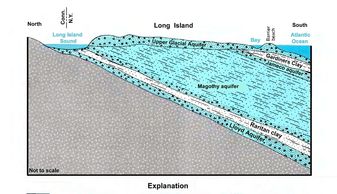
The Lloyd Aquifer beneath Long Island, New York has special protected status in New York. This report is a detailed look at why that status is appropriate.
Legal Review of Lloyd Aquifer Protection
Legal Review of Lloyd Aquifer Protection
The legal history of protecting the Lloyd Aquifer is reviewed here and how groundwater science supports the state policy for the Lloyd.
New Projects
Issues of Public Interest
Watch for more details.
Issues of Public Interest
Issues of Public Interest
In development.
Share the big news
Emerging Contaminants in Drinking Water
Stay tuned for more stories and reports.
Emerging Contaminants in Drinking Water
Emerging Contaminants in Drinking Water
Coming soon.
recent projects

Project to map superfund sites on Long Island
This graduate thesis project by Vincent Varricchio used the ESRI Story Map feature to provide important information about three major Superfund sites: the Fulton Ave sites, the former Unysis site and the Grumman-Navy site. See this one-of-a-kind project to show the groundwater impact of these three major areas in Nassau County, NY. 6-2016.
Recent Student Research on Drought and the Refugee Crisis in Africa
Environmental Technology & Sustainability graduate student, Rachel Pereira, created a new Story Map on ESRI.com that tells the story with visuals and maps of how climate change, and specifically drought, is changing environmental conditions in Africa. These changes are a significant factor in the growing climate refugee crisis there. 12-2019.
The Price of Drinking Water on Long Island
Student project identifies water costs for all major water suppliers. Coming soon.
Promoting Current Research
Areas of interest for developing new research discussed here.
Share the big news
FAQs
Coming soon.